logo

Guangzhou Xingjin Fire Equipment Co.,Ltd. info@xingjin-fire.com 86--18011936582

Guangzhou Xingjin Fire Equipment Co.,Ltd. Profiel van het bedrijf
producten
Thuis > producten > Brandalarm > J-SAP-JBF4121A Manual Fire Alarm Button for Data Centers

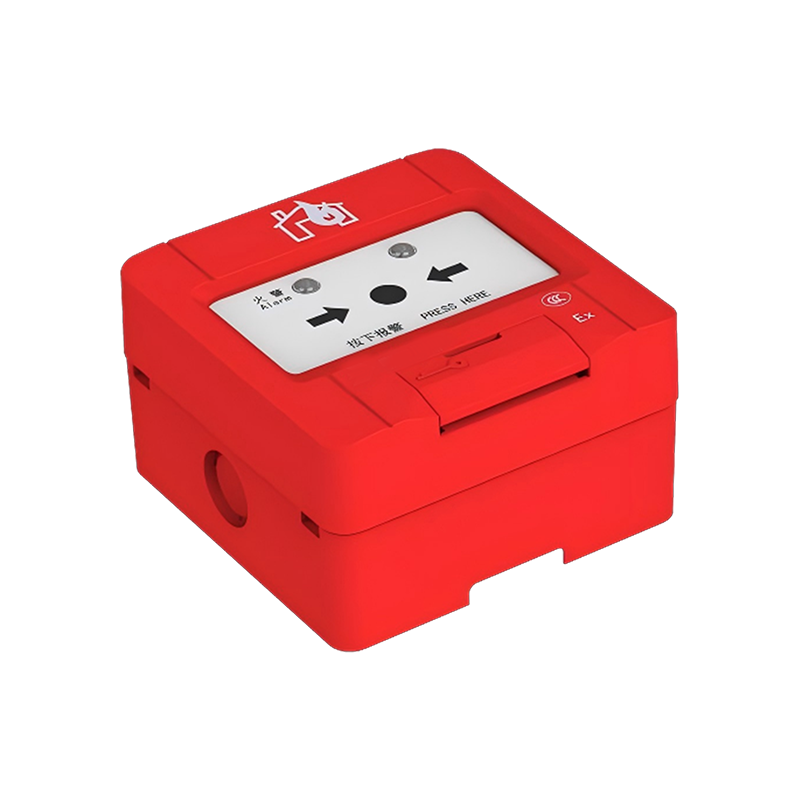
J-SAP-JBF4121A Manual Fire Alarm Button for Data Centers

Productgegevens

Plaats van herkomst: GUANGZHOU, CHINA

Merknaam: XINGJIN

Certificering: CCC;GB/T 3836.1-2021;GB/T 3836.4-2021;GB 19880-2005

Modelnummer: J-SAP-JBF4121A

Betaling en verzendvoorwaarden

Min. bestelaantal: 100 sets systeem

Prijs: USD3-4/pc

Verpakking Details: Houten kist of multiplex buitendoos met bellenzak of papier

Levertijd: 15-20 dagen

Betalingscondities: T/T,L/C

Levering vermogen: 300.000 sets per maand

Vind de beste prijs
Productgegevens
Markeren:
PoE:
Optioneel
Temperatuur:
-10℃ aan +55℃
Installatie:
Wandmontage
Stroom:
Batterij
Werkspanning:
DC19-28V
Minimale Oederhoeveelheid:
1SET
Busspanning:
Gelijkstroom 14 V ~ gelijkstroom 24 V
Aangegeven licht:
Rood (alarm/mislukt), groen (actief)
Lichtintensiteit:
135cd
Bedrijfstemperatuurbereik:
-10°C tot 50°C
Gebruik:
Brandalarmweergave en alarmerend
Nominale diameter:
15 mm, 20 mm
Vermogensspanning:
Gelijkstroom 24V
Alarmconcentratie:
0.65~15.5%FT
Onderhoud:
Maandelijks testen aanbevolen
PoE:
Optioneel
Temperatuur:
-10℃ aan +55℃
Installatie:
Wandmontage
Stroom:
Batterij
Werkspanning:
DC19-28V
Minimale Oederhoeveelheid:
1SET
Busspanning:
Gelijkstroom 14 V ~ gelijkstroom 24 V
Aangegeven licht:
Rood (alarm/mislukt), groen (actief)
Lichtintensiteit:
135cd
Bedrijfstemperatuurbereik:
-10°C tot 50°C
Gebruik:
Brandalarmweergave en alarmerend
Nominale diameter:
15 mm, 20 mm
Vermogensspanning:
Gelijkstroom 24V
Alarmconcentratie:
0.65~15.5%FT
Onderhoud:
Maandelijks testen aanbevolen
Productbeschrijving

Products Description

  In automatic mode, when any detector senses a fire, it immediately transmits a signal to the control panel. The control panel then activates the audible and visual alarm devices, starts the exhaust fans, disconnects non‑essential power supplies, and sends a command to recall all elevators. If a person discovers the fire, they can press a manual call point to trigger the same sequence.

  For areas protected by a gas‑based fire suppression system, the release sequence begins only after two independent detectors have been activated. Once this condition is met, a pre‑determined delay timer starts. After the delay elapses, the extinguishing gas is released, and the release indicator lights illuminate to clearly warn people not to enter the protected area. All these functions work together to ensure fast fire detection and safe occupant evacuation.


J-SAP-JBF4121A Manual Fire Alarm Button for Data Centers 0


1. Detection Layer (Sensors)

The detection layer acts as the sensory system of the fire alarm installation. It includes smoke detectors, heat detectors, and combined smoke‑and‑heat detectors.

  • Smoke detectors sense changes in air caused by combustion and are ideal for offices, hotels, and corridors.

  • Heat detectors monitor temperature increases and are well suited for kitchens, car parks, and plant rooms.

  • Combined detectors use both smoke and heat sensing to reduce false alarms, making them a preferred choice for hospitals and premium commercial buildings.

  • Beam smoke detectors are recommended for large‑volume spaces such as warehouses, atriums, and sports stadiums.

  • Flame detectors should be used in high‑risk areas, including oil depots, fuel storage zones, and chemical plants.

J-SAP-JBF4121A Manual Fire Alarm Button for Data Centers 1


2. Input Layer (Manual and Monitoring Equipment)

This layer enables manual initiation and external equipment monitoring. It consists of manual call points, input modules, short‑circuit isolators, and fire telephone sockets.

  • Manual call points are installed near exits, staircases, and common areas, allowing anyone to manually trigger an alarm.

  • Input modules receive status signals from external devices, such as water flow switches, pressure switches, and control valves.

  • Short‑circuit isolators automatically disconnect faulty sections of the loop, ensuring the rest of the system remains operational.

  • Fire telephone sockets enable direct communication between firefighters and the central control panel during an emergency.

J-SAP-JBF4121A Manual Fire Alarm Button for Data Centers 2

3. Control Layer (The “Brain” of the System)

The control layer is the central intelligence of the entire fire alarm system. Its main components are the Fire Alarm Control Panel (FACP) and the Gas Suppression Control Panel.

  • The FACP receives signals from all detectors and modules, decides when to generate alarms, and activates all connected field devices.

  • The Gas Suppression Control Panel is specially designed for FM200, IG541, CO₂, and other clean agent systems. It supports functions such as delay before releasemanual/automatic mode selection, and pressure switch monitoring.

  • Additional control devices include repeater panels for displaying alarms on different floors and fire broadcast control panels for playing pre‑recorded or live evacuation messages.

J-SAP-JBF4121A Manual Fire Alarm Button for Data Centers 3

. Execution Layer (Alarm and Action Equipment)

The execution layer carries out the commands issued by the control panel. It includes alarm sounder‑strobes, output modules, fire alarm bells, and gas release indicators.

  • Alarm sounder‑strobes produce high‑audibility sounds and flashing lights to clearly alert occupants to evacuate.

  • Output modules control external equipment such as exhaust fans, fire dampers, power cut‑off relays, and elevator recall units.

  • Fire alarm bells offer a cost‑effective solution for conventional or smaller systems.

  • Gas release indicators are mounted at the entrance of each protected area. They illuminate when gas is about to be released or has already been discharged, providing a clear visual warning not to enter.


Product Advantages

J-SAP-JBF4121A Manual Fire Alarm Button for Data Centers 4
J-SAP-JBF4121A-Ex Manual Fire Alarm Button
1.Built-in microprocessor, stable performance.
2.Adopts SMT surface mount technology, with high reliability and good consistency.3.Uses a dual-bus system, without polarity requirements, ensuring low power consumption while enabling the
transmission distance to reach up to 1000m4.Explosion-proof type is intrinsically safe, requiring a safety barrier to be connected for use.5.Electronic coding method, can be addressed through a dedicated electronic encoder6.Operation is simple. Pressing the operation panel on the panel can realize reporting  fire alarm to the controller.7.The operation panel of the manual alarm button needs to be reset after being pressed. This must be done using adedicated key that matches the button.
8.The manual alarm button adopts a plug-in structure, which is easy for customers to install, construct and maintain


Products Parameters

J-SAP-JBF4121A Manual Fire Alarm Button for Data Centers 5
Operating environmental conditions
Operating temperature -10 to +55°C
Storage temperature -30 to +75°C
Relative humidity ≤ 95% RH (40 ± 2°C)
Parameter Technical Specification
Operating Voltage DC 18-28V, modulated type provided by controller (must use safety barrier)
Standby Current ≤0.3mA (24V)
Alarm Current ≤1mA (24V)
Explosion-proof Mark Ex ib IIC T6 Gb
Addressing Method Electronic encoder addressing
Addressing Range 1-200
Indicator Light Fire indicator flashes momentarily in standby mode; stays steady red when pressed and in alarm
Dimensions 90mm (L) × 90mm (W) × 52mm (H)
Wiring System Two-wire bus, non-polarity